AI/ML Execution Monitoring
Engineers need to know what's going on with their models and processes as they run (execute) to ensure they're meeting SLA and business obligations. Execution monitoring is just that: it helps modelers react when things go wrong and make proactive improvements.
To be well managed and mitigate risks, Capital One needed to build an enterprise solution that could ensure compliance and scale to other ML pipeline applications, such as model scoring, cost monitoring and system status alerting.
Role
Team
- 1 Product Manager
- 4 Developers (Overseas)
- 1 UX Designer
TimeLine
skills
Impact
- Defined scope from business needs, led user research, and developed UX/UI design for an internal AI/ML monitoring tool. Collaborated with product partners to deliver pilot design to 300+ model developers
- Strategically defined experience of multiple features, like AI anomaly detection and automated notifications, for future releases
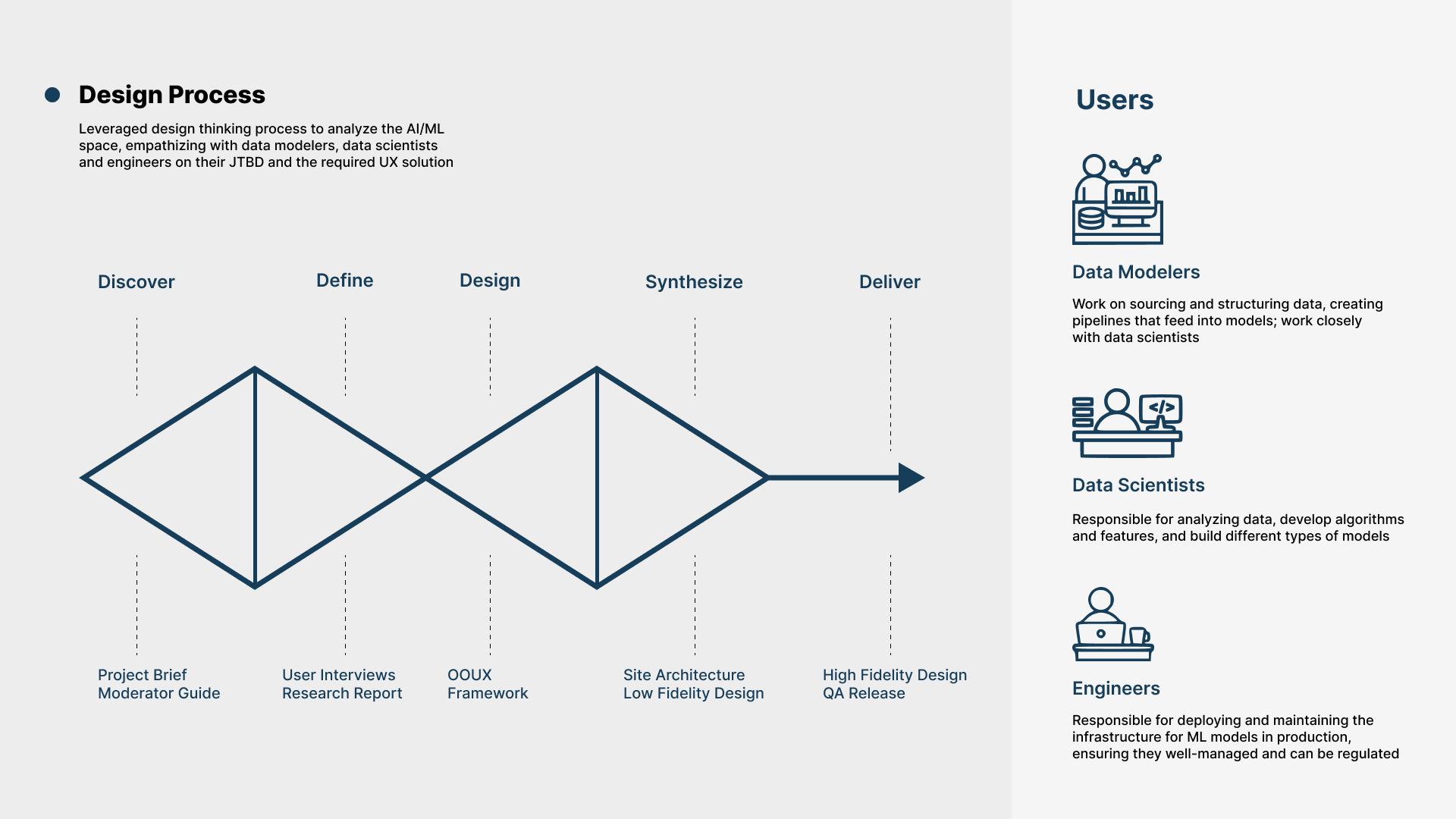
Discover
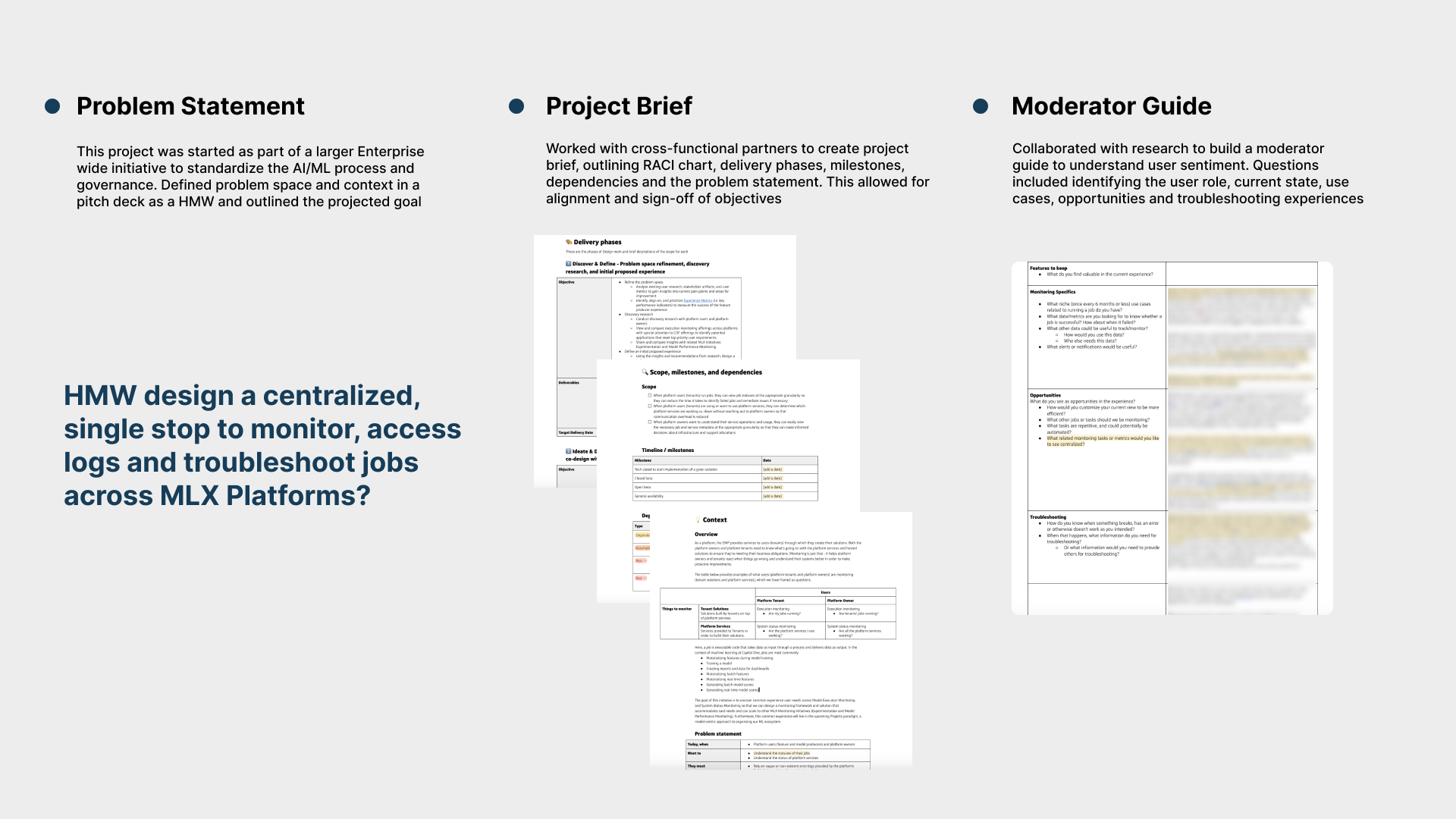
Objective: Research and develop a UX/UI solution that allows users to view all services and jobs running on Capital Ones machine learning platform, information about their status, the creation of dashboard views and alerts at different scopes.
Contribution: Translated business needs into project brief, build moderator/user guide, recruited model developers and documented existing constraints.
Result: Aligned on project scope with partners, kicked off research and established design objectives
Define
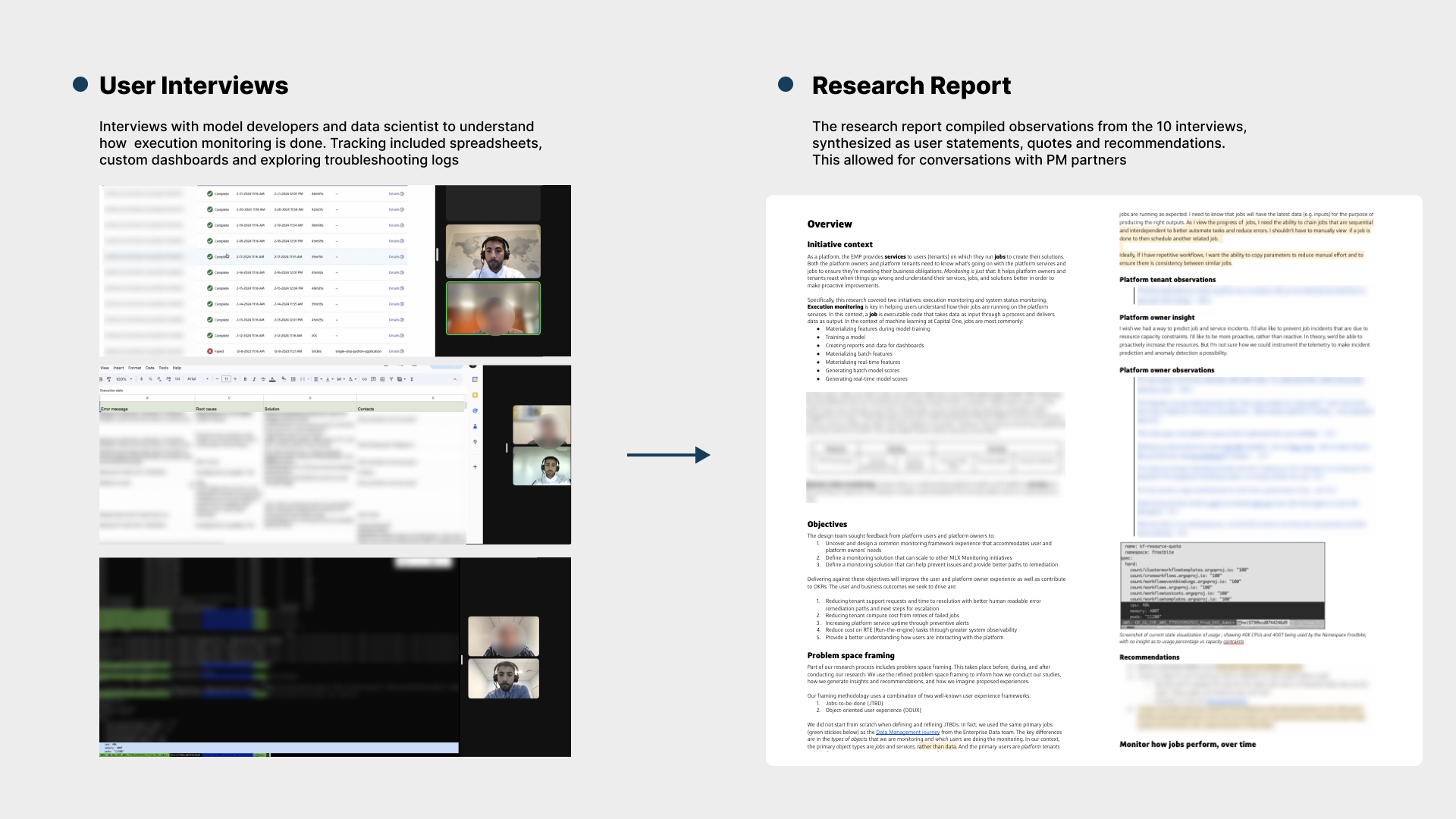
Objective: Synthesize collected interviews into prioritized set of recommendations and prototype
Contribution: Moderated and led 10 interviews, distilled information into research report, documented findings and provided strategic recommendations
Result: Research report was leveraged in prioritization conversations with partners
Design
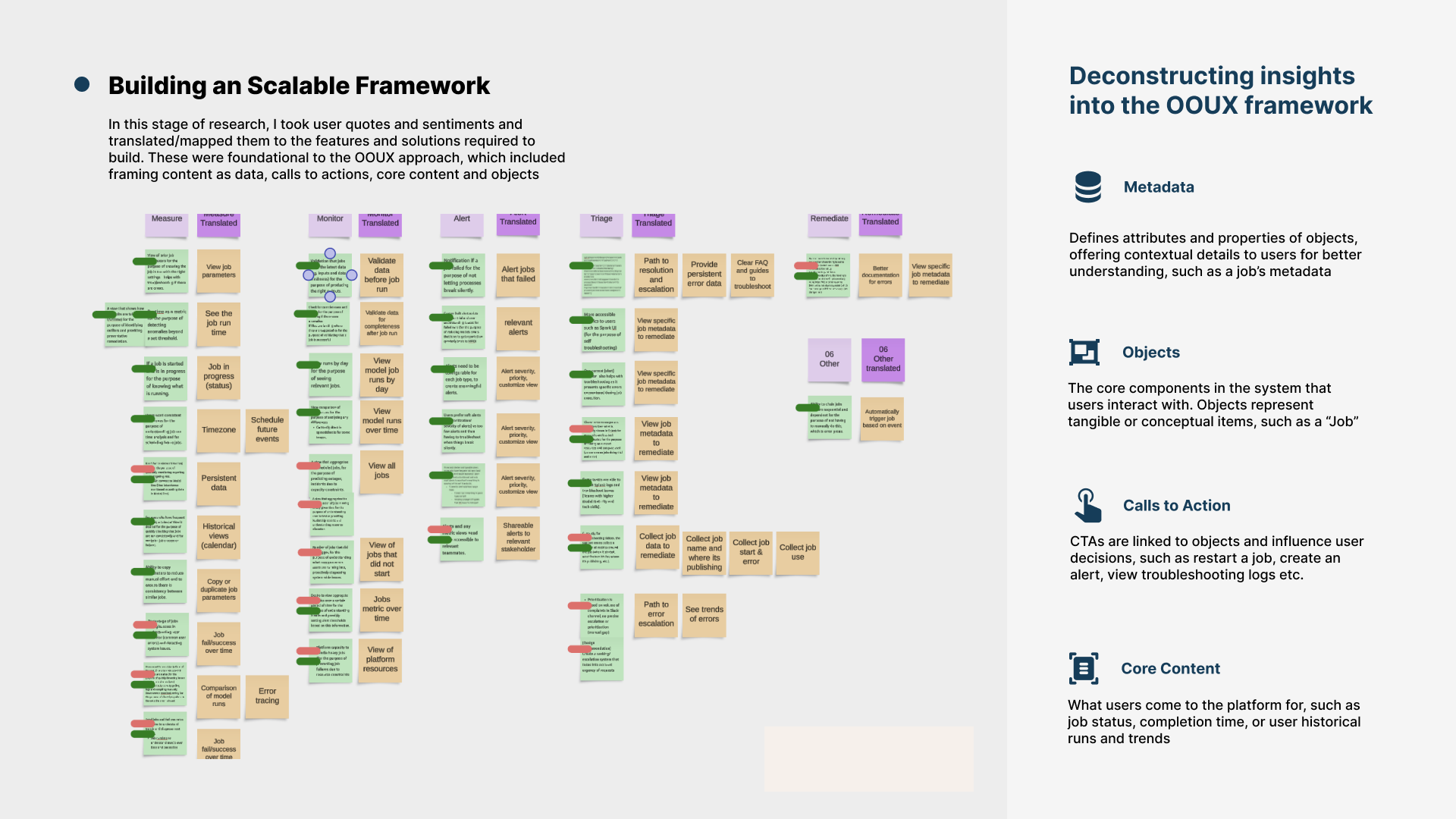
Objective: Create a scalable design and back-end system that allows for incremental roll out of features.
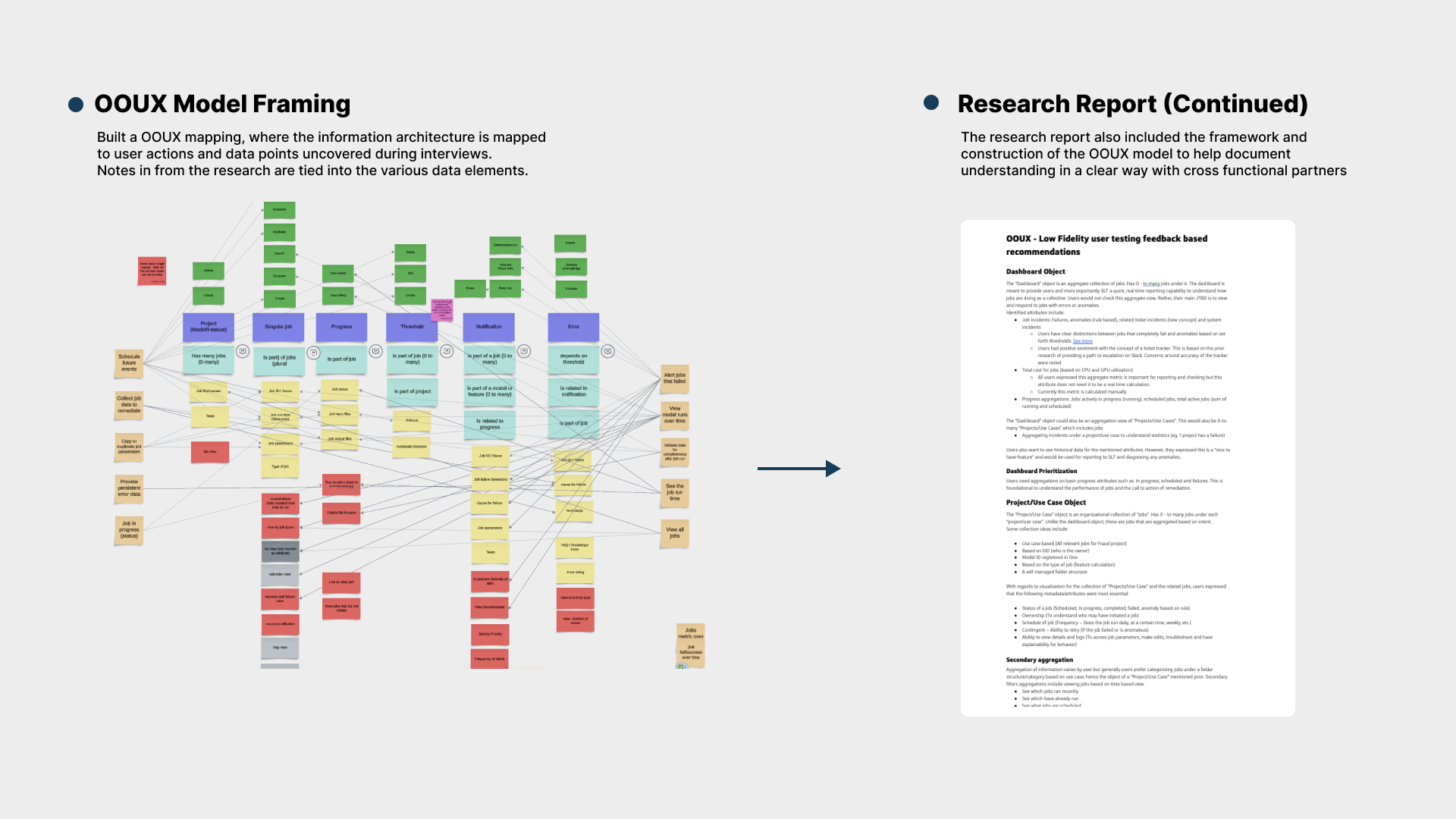
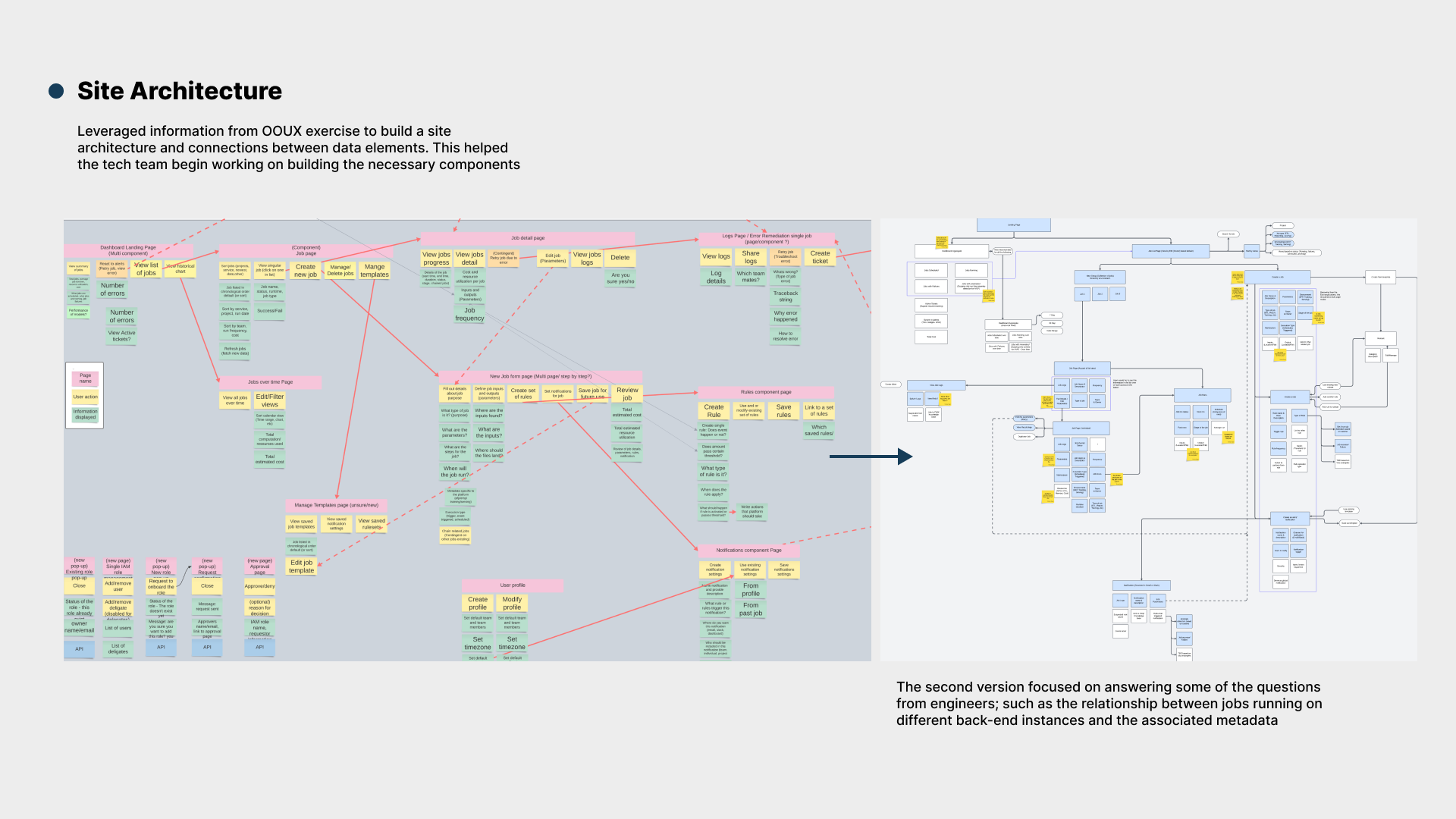
Contribution: Built an object-oriented UX (OOUX) framework and approach to collaborate with product and tech partners. Delivered multiple data requirements and hierarchy of components.
Result: Prioritized a set of features, like anomaly detection, email notifications, rules engine, etc. and the technical data requirements needed to support those features.
Synthesize
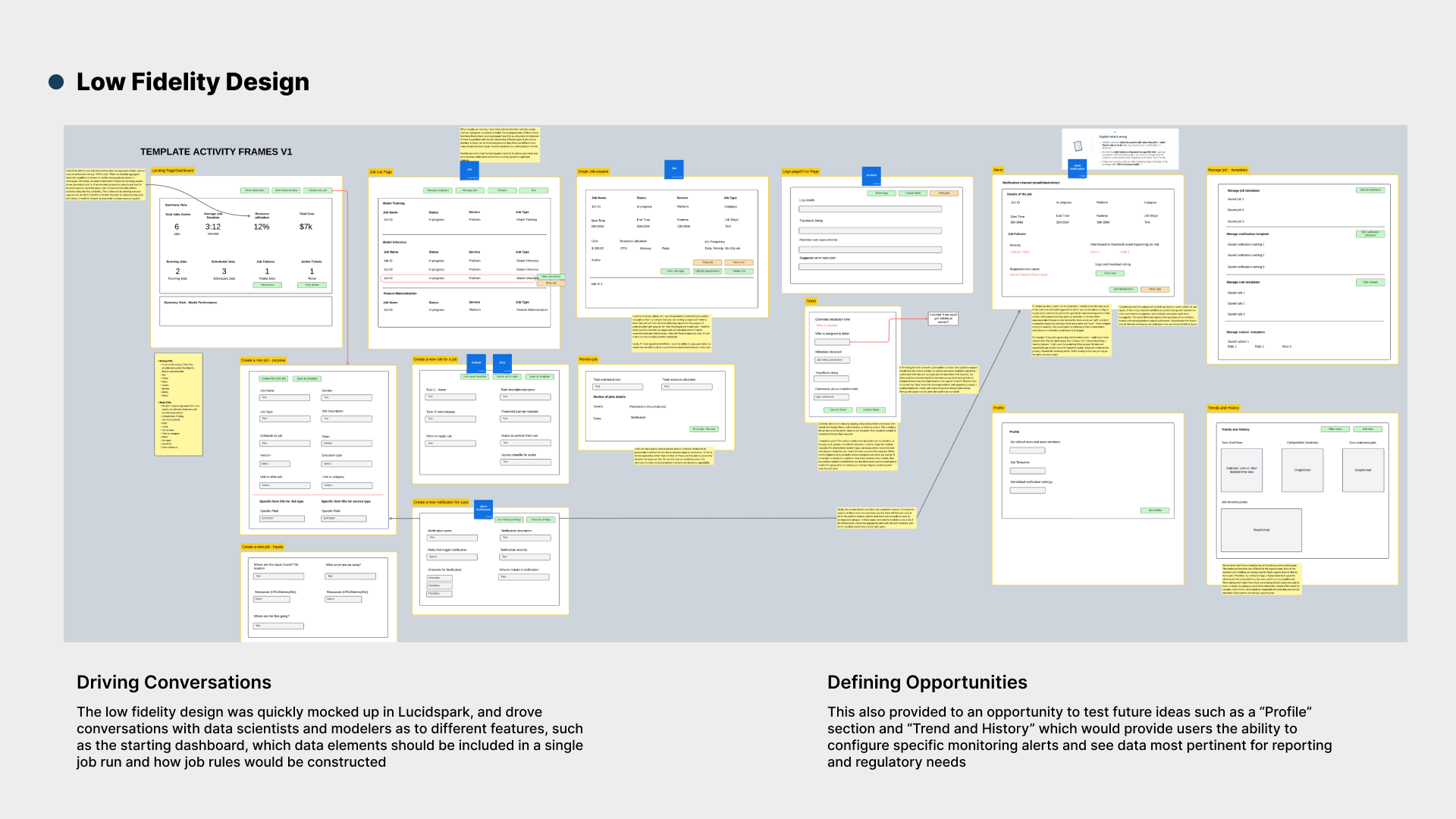
Objective: Test the OOUX framework as a low fidelity design, gather feedback from users on the data elements and information architecture
Contribution: Led 5 workshop sessions with model developers to gather feedback on early prototype design, synthesized findings into refined visual
Result: Developed clear understanding of UX/UI design and necessary data elements.
Deliver
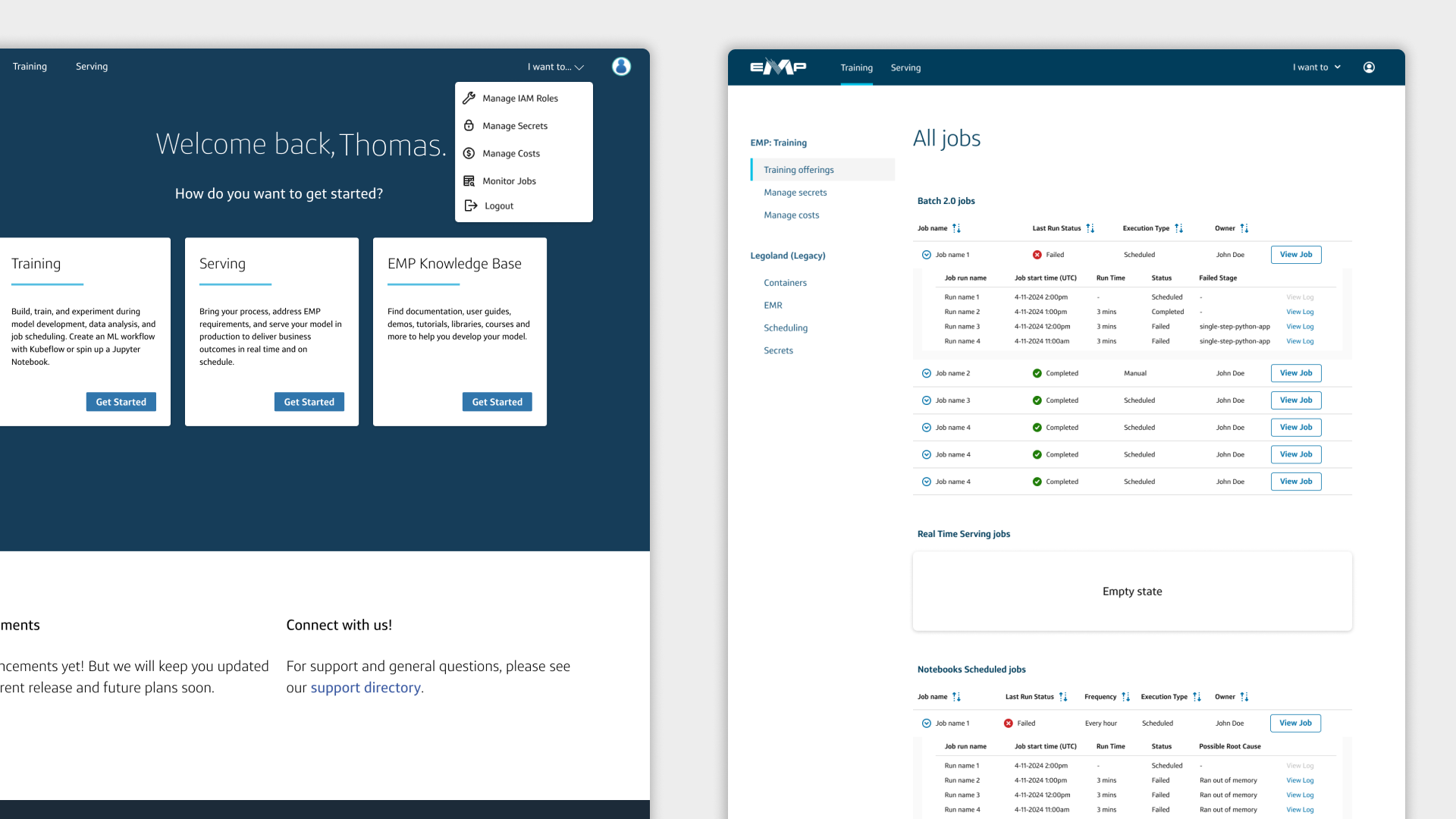
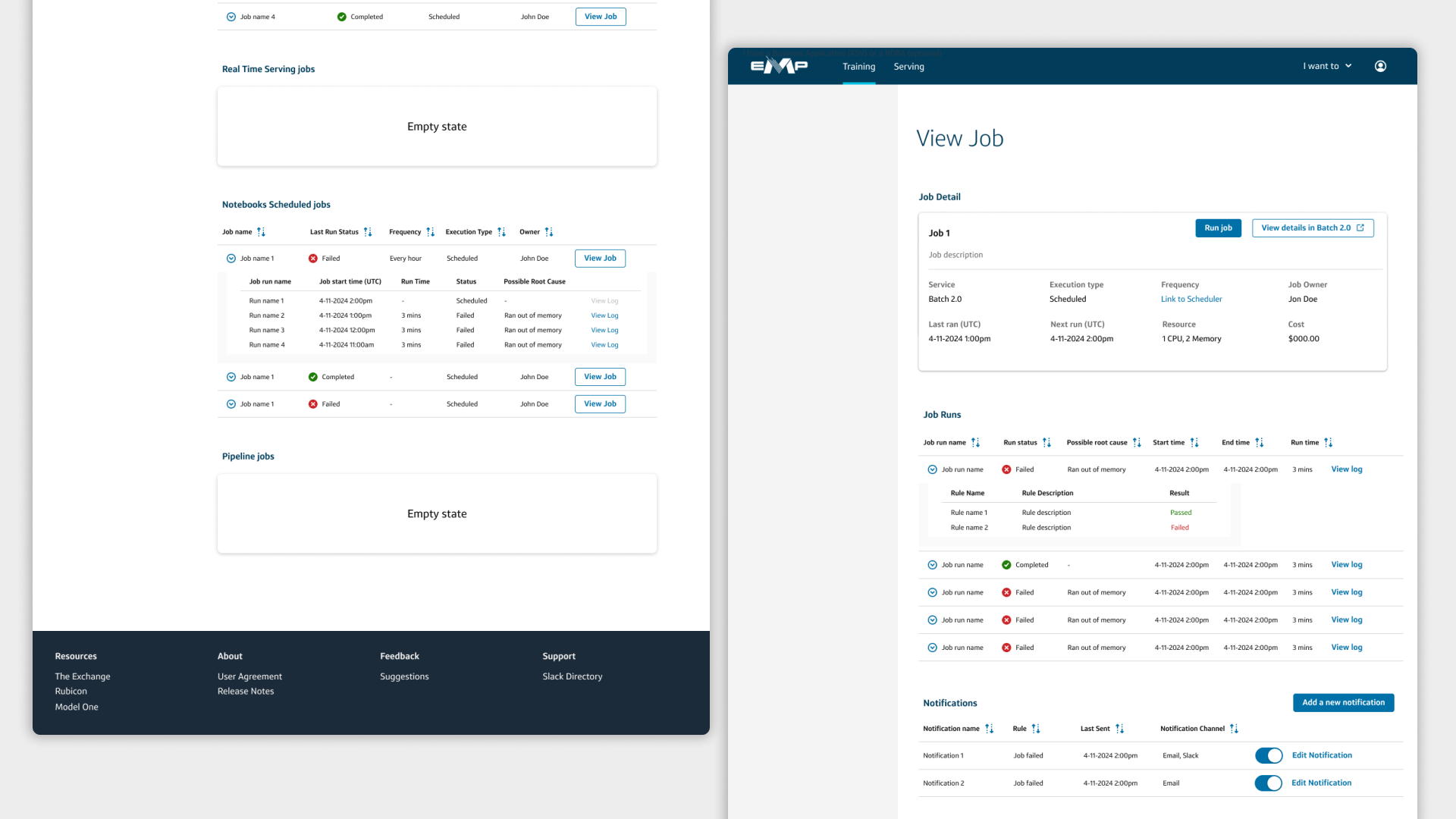
Refine the design based on feedback and design expertise into QA pilot:
- Built a high fidelity, click through prototype of the experience in Figma. Created a hand off document. Worked with product and tech to prioritize features based on data feasibility.
- Limited release of central dashboard for execution monitoring compute jobs for 300+ model developers
.png)
.svg)